From idea to execution.
Most governments only manage their property day to day, handling maintenance and keeping up with compliance. We help you manage it as a financial asset instead. Starting from your full inventory, we find the sites worth activating and turn the best of them into real projects that generate revenue and public benefit.
We bridge the gap between cities and developers.
Your government
You own valuable land and have real goals for it, but not the staff capacity or the developer relationships to get a project built.
Propvizer
We find your highest-value sites, prepare them for the market, and run the due diligence. Then we negotiate on your behalf, knowing how developers price a deal.
Development partner
The developer gets a site that is ready to build on, with clear terms and a government across the table that understands how development works.
Six services, one through-line.
Every engagement follows the same path, with each service handing off to the next, from the first inventory to the final report.
-
Identify & Value Assets
We inventory everything you own and estimate what each site is worth, so your decisions start from real numbers.
-
Design & Launch RFPs
We prepare and run the competitive solicitation for a site, so you get strong, comparable proposals to choose from.
-
Attract & Evaluate Proposals
We bring developers to the table and help you weigh their proposals against your community's goals.
-
Negotiate Contracts
We negotiate the ground lease and development agreements, keeping the land in public ownership and locking in the benefits you want.
-
Secure Financing
We help assemble the financing from private, public, and philanthropic sources, so approved projects actually get built.
-
Track Execution & Reporting
We monitor the project through construction and report progress in plain terms your council and residents can follow.
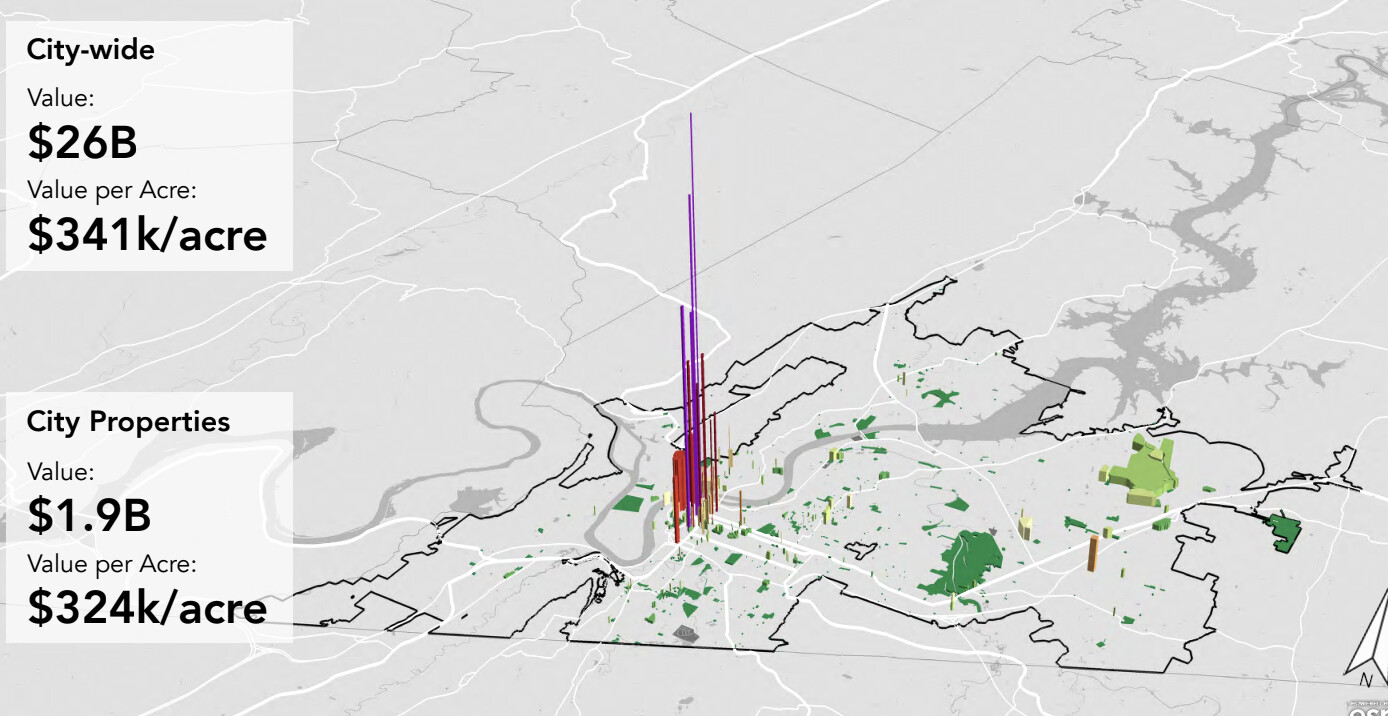
The whole portfolio, narrowed to what's buildable.
We don't start with a favorite site. We look at the entire portfolio and screen it down to the opportunities that are actually worth pursuing.
The lifecycle of a working asset.
Idle public asset
An underutilized site that typically costs money and produces limited benefit.
Identify + prep site for development
Site identification and repositioning. Complete due diligence and select a real estate partner.
Redevelop asset
A developer builds; the government keeps long-term interest in the asset.
Revenue + community benefit
The government earns lease income for decades, and vacant land becomes new housing.